5 Reasons Operators Working Alone Are Putting a $700 Fogger Where the Chute Used to Be
Tags, pour-ons, dust bags, a morning in the pens — every one of them starts the same way. You have to catch her first. That's the step a few operators quietly cut out, and most of them never mentioned it to anybody. The part nobody explains is why the cattle don't scatter when you do it.




There's a post going around from an operator in a county without a large-animal vet. Most of it is about how nobody out there compares notes. Then it lands on four words:
“Not the chemical. The catching.”
— from the post that brought most of you here
That line reframes the whole problem, and it's worth spending a page on, because the moment you accept it, the shopping list changes. You stop comparing bottles and start looking at what it takes to get product onto an animal when there's one of you.
Every Option You've Got Starts With Catching Her First
Run the list. Tags mean a chute. Pour-ons mean a chute. Sprays mean a chute, or a squeeze, or at minimum a gate and somebody standing at it. Every one of them is a good enough product. Every one of them is gated on the same thing, and it isn't chemistry.
It's a second man, a facility, and a day you don't have. So the real plan most outfits are running is: gather when there's time and help, and hope the stretch in between doesn't cost too much.
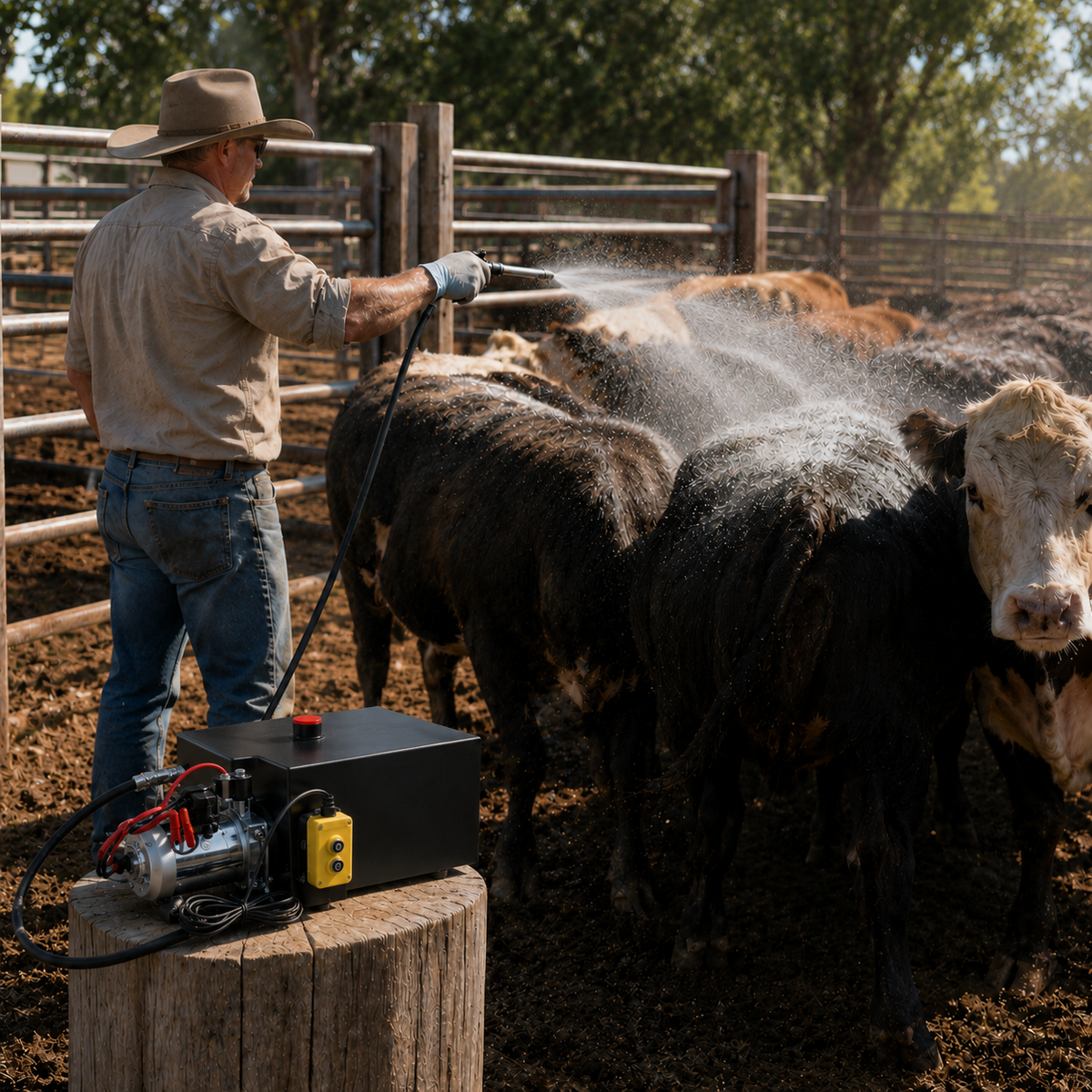
One Pass Covers the Bunch. No Chute. No Second Man. No Day Set Aside.
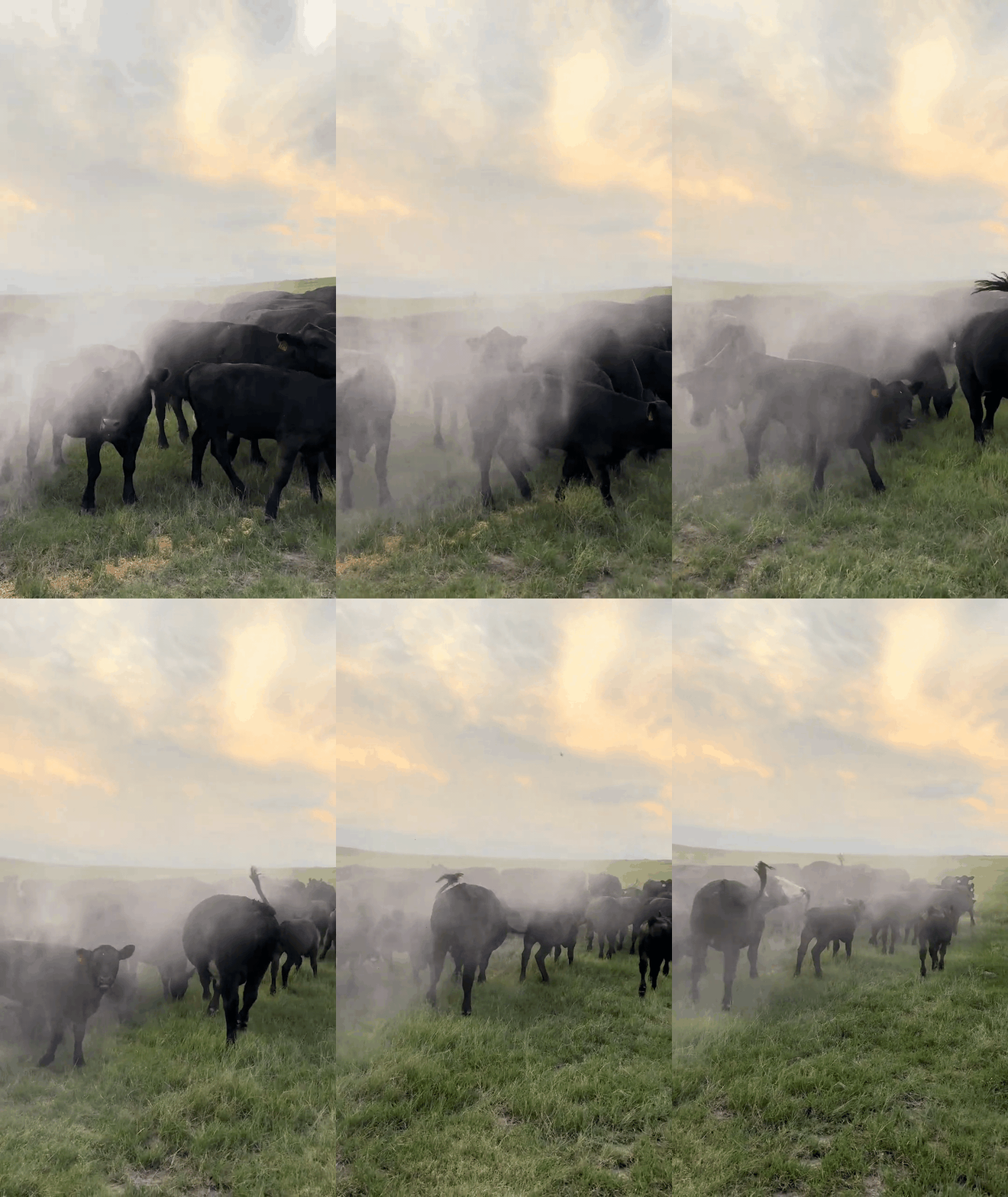
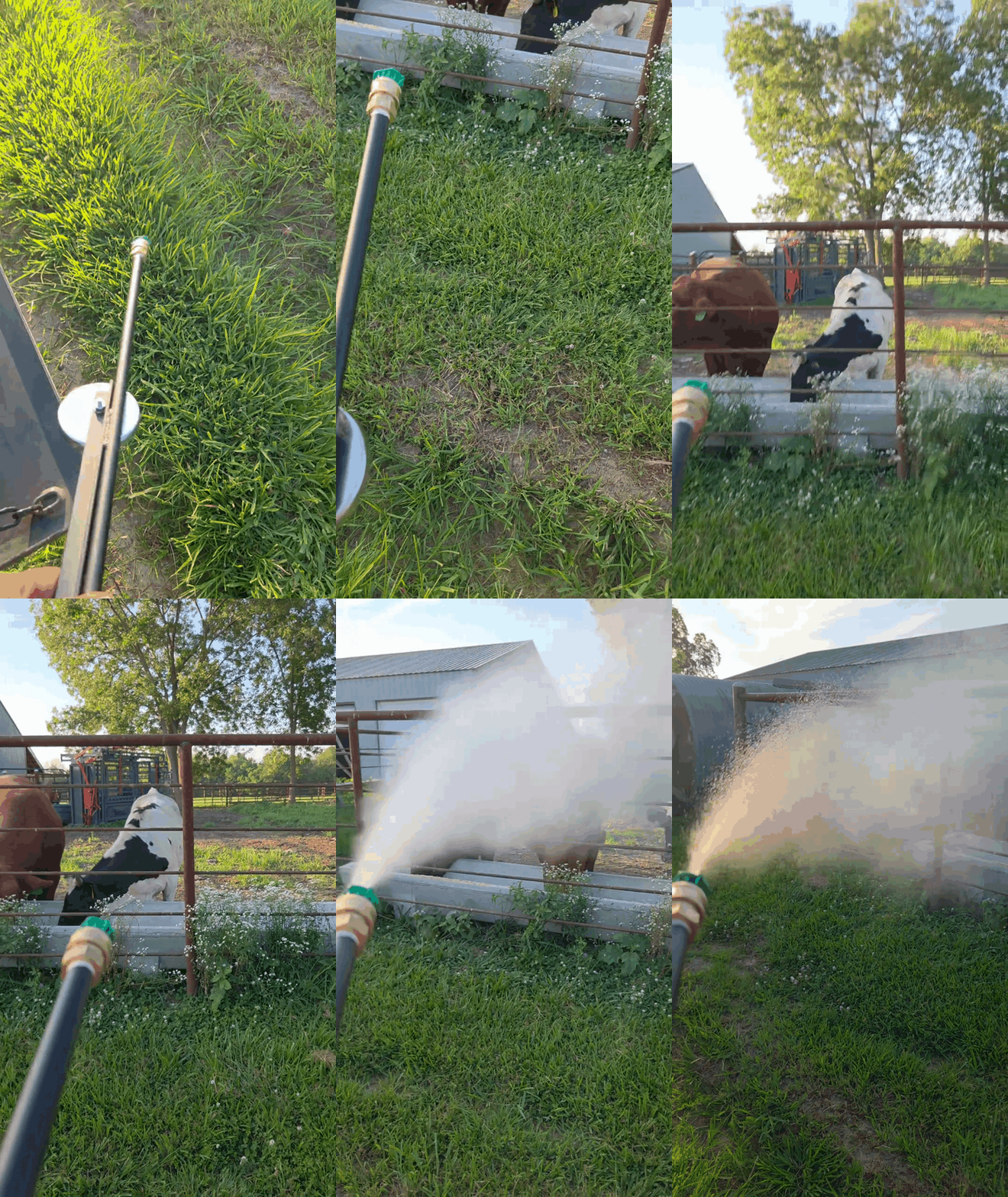
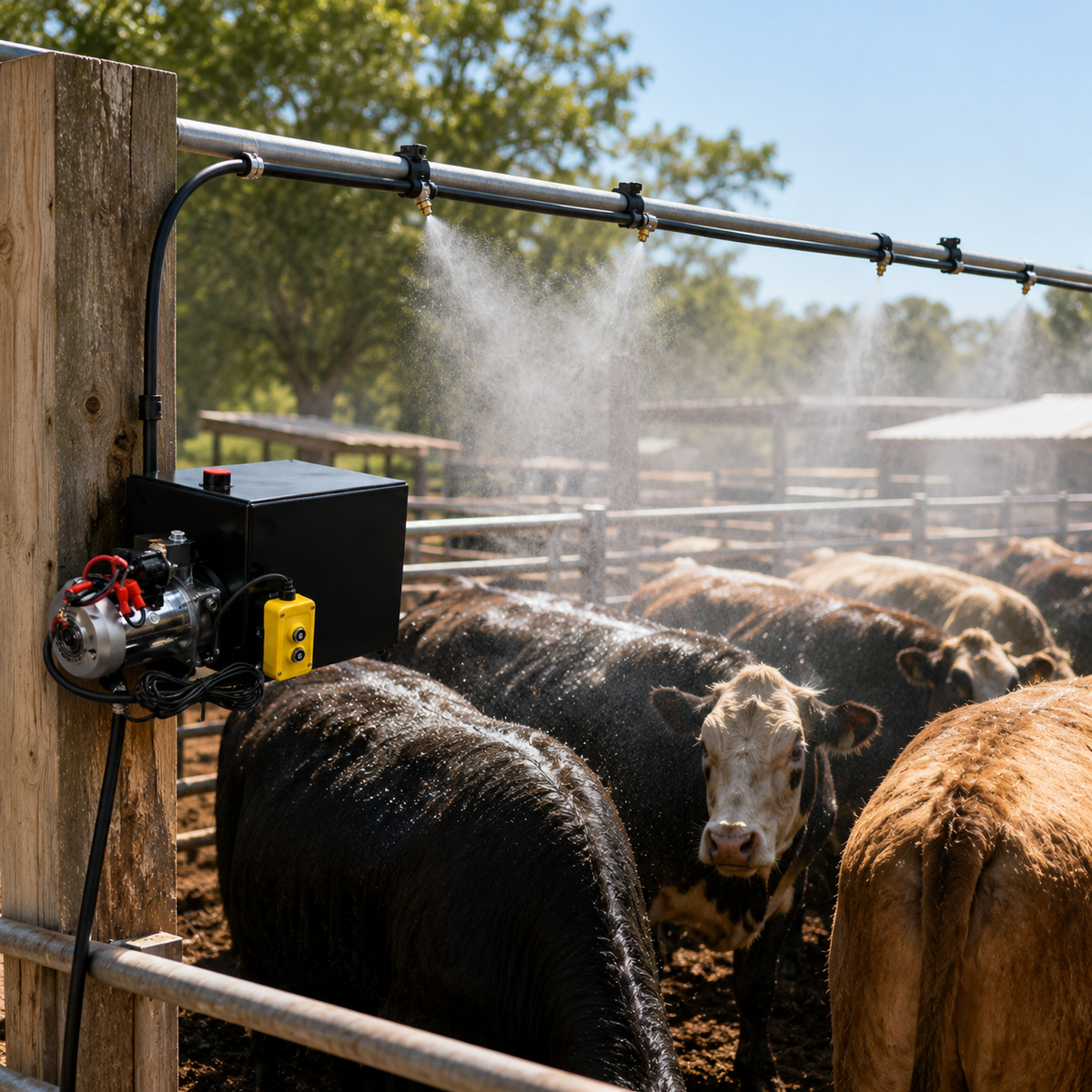
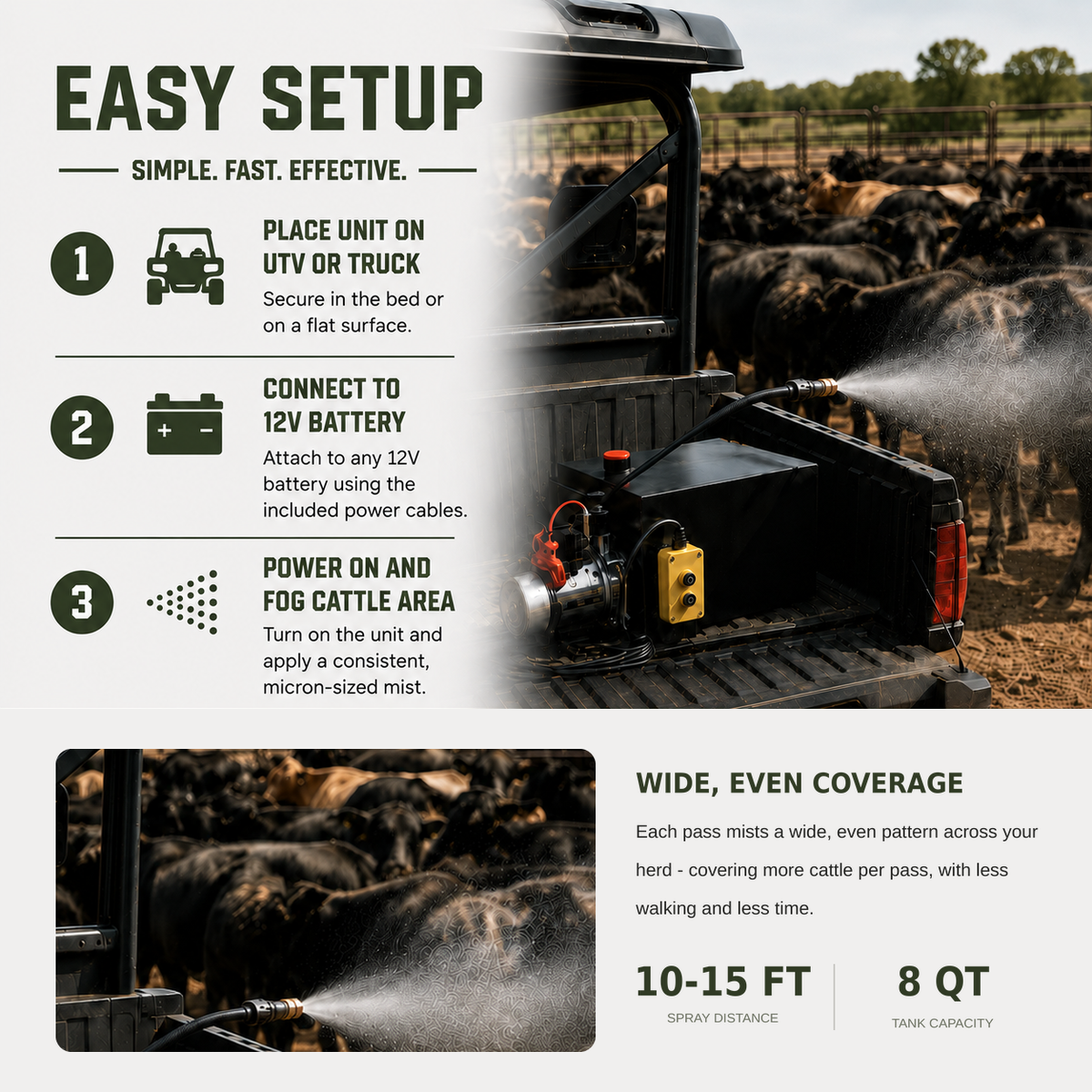
Watch the mist in the clip. It doesn't go on one animal at a time — it rolls over the group and hangs there, reaching roughly 10–15 feet in calm air. Drive the feed line while they're eating. Idle down a fence line. Walk a barn alley on foot.
The point isn't that it's faster. It's what stops being on the list. Nobody to call. Nothing to pen. No Saturday spent on it. You're not waiting for a window anymore, because the window is any afternoon you feel like it.
The Reason You Don't Have to Catch Her: It Doesn't Hit Hard Enough to Move Them
This is the part that decides whether any of the above is real, and it's the question most people don't think to ask until they're standing there with the switch in their hand: won't they just run off?
A fogger doesn't throw a stream at an animal. It breaks liquid into a fine mist that drifts and settles. There's no jet, no slap of cold water, no noise that means anything to a cow at the bunk. Buyers keep reporting the same thing about it — and that's exactly why no facility is needed. Handling equipment exists to hold an animal still. Nothing here is asking her to stand still.
It Runs the Product You Already Buy — and Goes Where a Tag Can't
This isn't a chemical and it isn't a program. It's the delivery side. You fill it with the fly control product you already trust — anything labeled for direct spray or mist application to cattle — and you follow that label. No new supplier, no new rates to learn, nothing to get approved.
And a pass puts product where you aim it. A tag releases from the head end. The belly, the underline and the legs are a long way from an ear, and that's the ground a mist pass can cover instead.
Two Clamps and a Quick Connect. Nothing to Go Hunt Down.
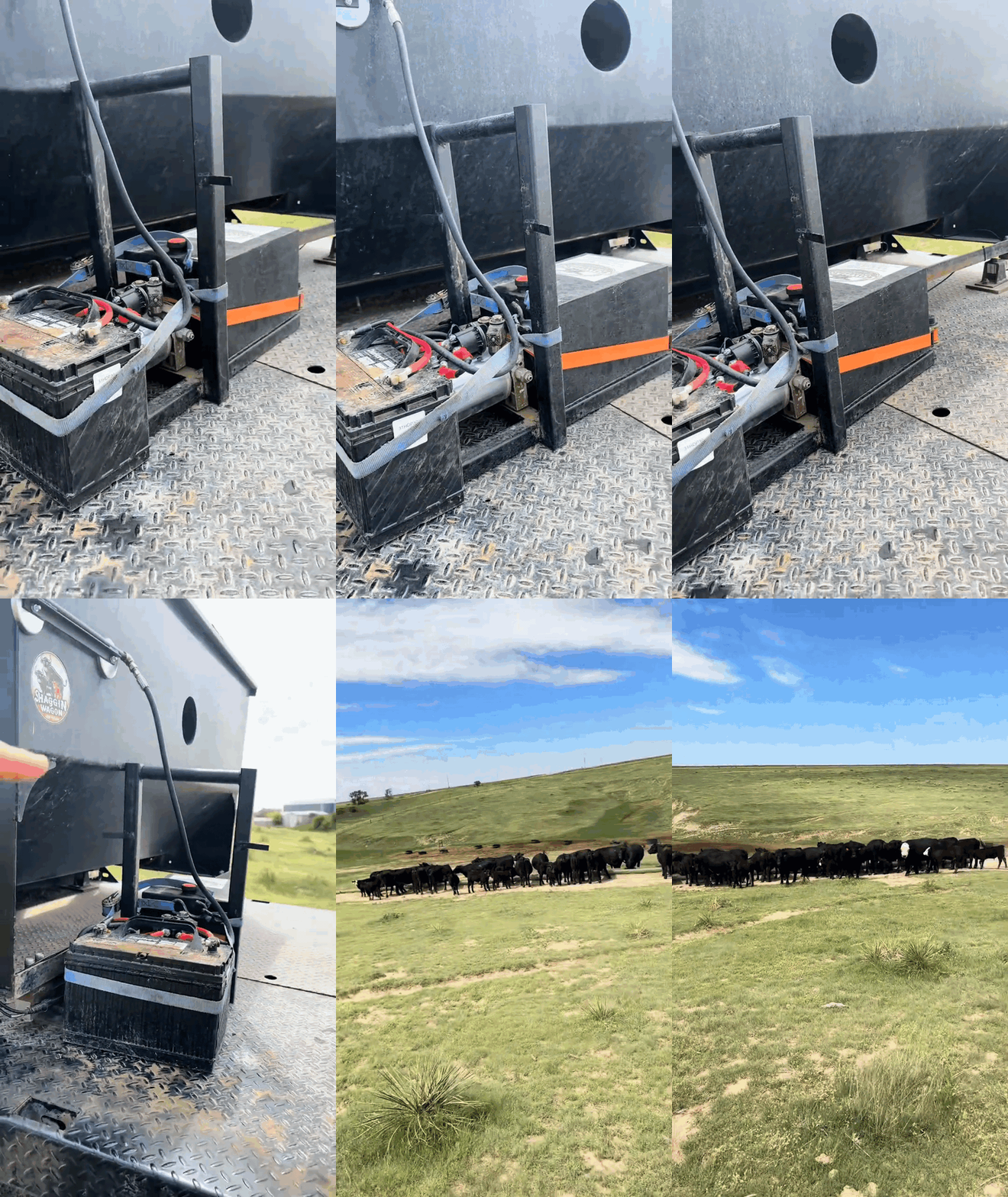
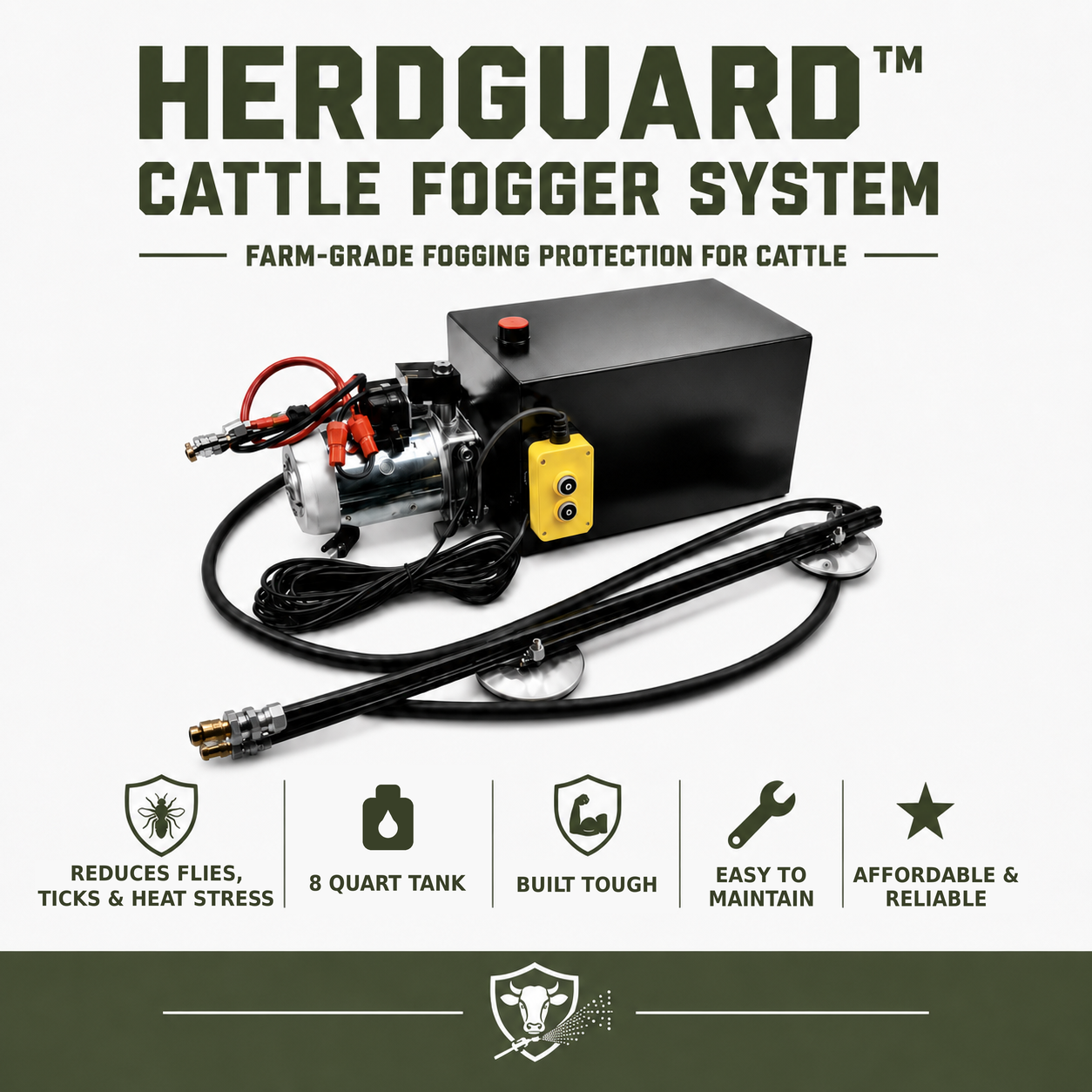
Clamp the 4-AWG cables to any standard 12V top-post battery. Snap the hose onto the quick connect. Flip the switch. No fuse-box work, no wiring job, no shop visit — and nothing that has to be ordered separately, because the hose, the couplers, the cables and the nozzle are all in the box.
Strap it in the UTV bed for pasture. Set it in the truck for the feed line. Pick it up and carry it down a barn alley where nothing with wheels fits. One unit, three ways to use it, and none of them need a helper.
A 12V fogger with an 8-quart tank that turns fly control from a head-by-head job into one pass. Mount it or carry it, clamp it to a battery, fill it with what you already use — and cover the bunch while they're eating.
Why $500 off? Fly season is our season. We'd rather sell through in July than warehouse units in October — and ITO Labs sells direct, so there's no dealer margin in the price to start with. When the sale ends it goes back to $1,199.99. That's the whole story.
The arithmetic, with the machine left out of it
Set HerdGuard aside for a second. This is just what the extension work says fly pressure costs, and it's the same number whether you buy anything or not.
University of Nebraska Extension puts horn flies at over $1 billion a year across U.S. producers, with the economic injury level at just 200 flies per animal — and Nebraska research found calf weaning weights 10–20 lb heavier when flies were controlled on the cows.
Run it on your own herd with your own numbers. Then set that against $699.95 once, for a machine that works every season after this one. We're not telling you what you'll get back — your herd, your climate, your fly pressure, your product and your management all decide that. We're telling you what the other side of the ledger looks like, and letting you do the multiplication yourself. Source: University of Nebraska Extension.
Will a single pass really reach the belly and the legs?
What do I actually put in the tank?
Will it spook the cattle?
Will it work on my truck's electrical?
How tough is it? This lives outside.
What about after a rain?
$699.95 is real money. Why not a cheaper unit?
How fast does it ship?
What if it doesn't do what I want?
Not everybody's setup is the same, and this won't be the answer for every outfit. But if the thing standing between you and getting product on your cattle is that there's one of you — that's the specific problem this solves. $699.95 during the Summer Sale, $500 off, shipped free, and 30 days to send it back.
Get HerdGuard — Save $500 →HerdGuard™ is a delivery system for livestock treatments. It is not a medicine or treatment of any kind. Always read and follow the label of any product you use, including all rate, interval, withdrawal, and application requirements. Nothing on this page is a claim about animal health, disease, or performance. Coverage and results vary by herd, climate, wind, fly pressure, product used, and management practices. Not veterinary advice — consult your veterinarian for a herd health program. Extension figures cited above describe the documented cost of horn fly pressure generally and are not a claim about outcomes from this product.